From Dock to Doorstep: Mapping the Logistics Value Chain
By Capucine di Palma & Diane Roux, Analysts at XAnge
Logistics is a foundational, mature industry, but it is currently navigating an unprecedented renaissance. Driven by the explosive boom of e-commerce and a hyper-globalized economy, the pressure on global supply chains has never been higher. Yet, for an industry projected to exceed €14 trillion by 2028, its core infrastructure has remained surprisingly antiquated, largely running on legacy spreadsheets and paper. Because the physical complexity of moving goods resisted digital transformation for a long time, the sector lagged behind. Today, that resistance is finally breaking down.
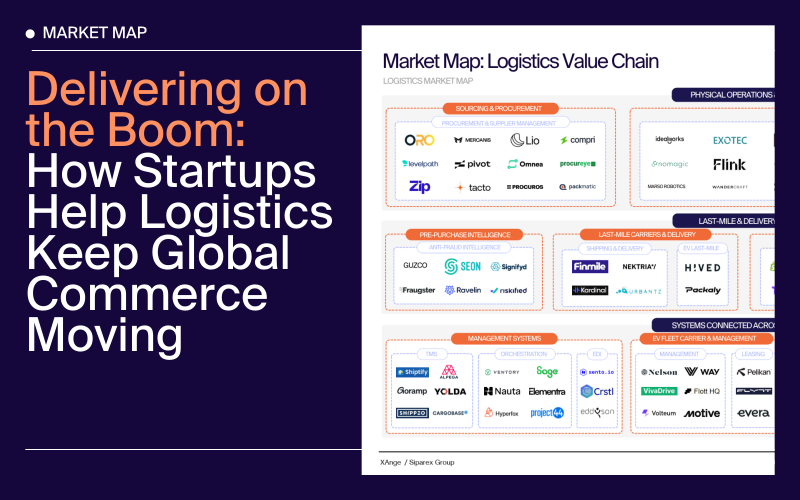
At XAnge and La Poste Ventures (CVC fund managed by XAnge), we mapped 100+ startups across the full logistics value chain: from warehouse robotics and procurement platforms to last-mile carriers, post-purchase operations, and sustainable freight.
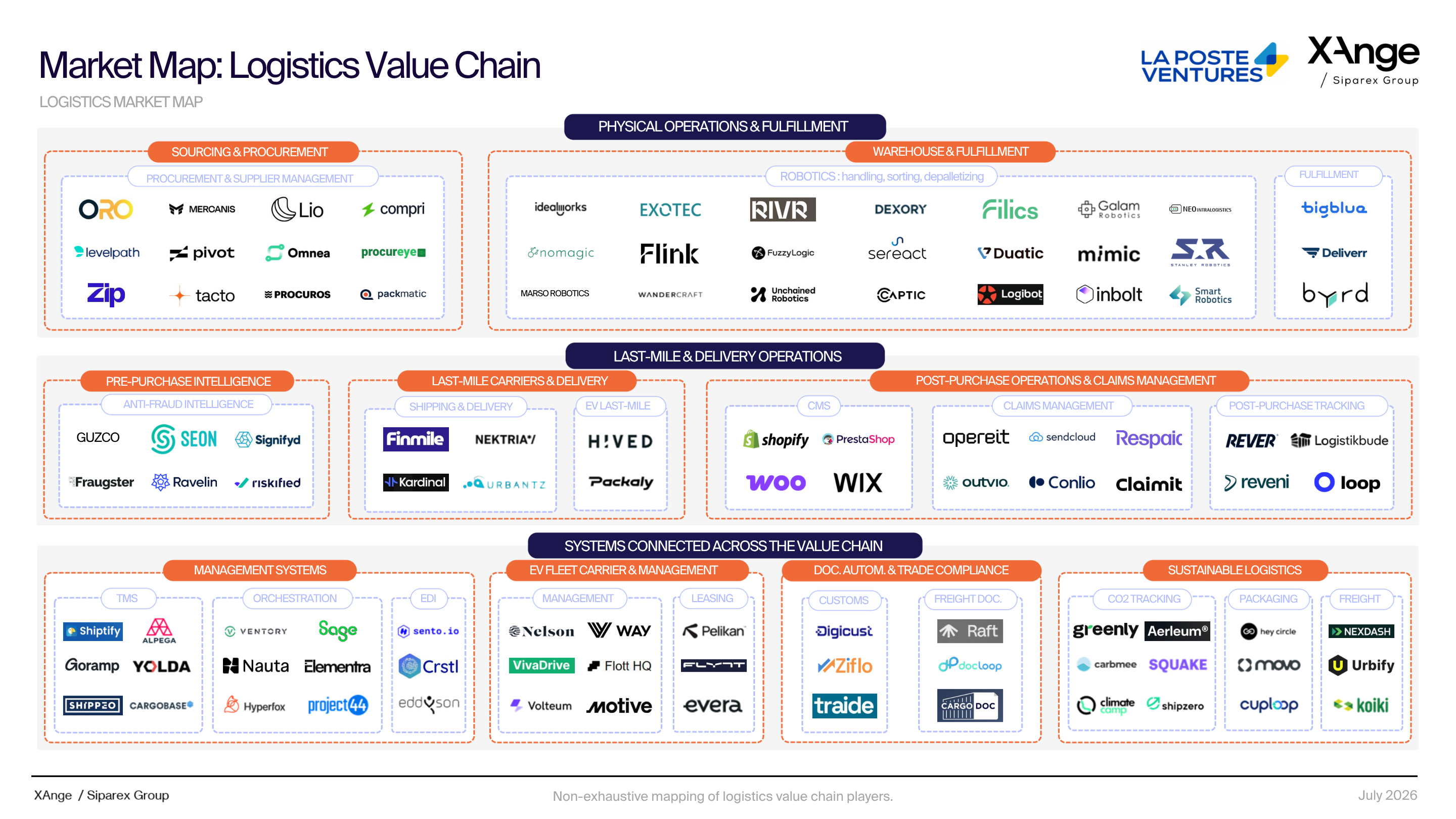
Part I: Physical Operations & Fulfillment
The first layer covers everything that happens before a parcel leaves the warehouse from supplier discovery to robotic pick-and-pack.
Sourcing & Procurement
Legacy procurement tools were built for large enterprises with dedicated buying teams and ERP suites, leaving the mid-market behind. Modern platforms such as ORO, Omnea and Zip rebuilds this layer to make supplier management and cost transparency accessible at every company. Procurement orchestration is becoming a category of its own, illustrated by players like Procuros and Packmatic.
Warehouse Robotics & Automation
In 2024, over 100,000 logistics transport robots were sold worldwide; up 14% year-on-year, according to the International Federation of Robotics. The falling cost of deployùent and the structural labor shortage in warehouse roles flagged by the European Labour Authority as one of the most acute in the EU, drive this trend. According to the IFR, logistics robots typically pay back their investment within 2 to 3 years, assuming round-the-clock operation. Exotec, RIVR, and Idealworks are redefining warehouse floor layout, while a new generation of depalletizing players, Inbolt, Captic, FuzzyLogic, is tackling the last unsolved dexterity problems in automation.
Fulfillment Networks
A new generation of outsourced fulfillment providers is competing directly with Amazon's FBA model in Europe. Bigblue, Deliverr, and Byrd are building pan-European networks that allow D2C brands to offer fast delivery without owning any warehouse infrastructure. The moat is the software layer orchestrating inventory positioning, returns management, and carrier selection across the network.
Part II: Last Mile & Delivery Operations
Last-mile delivery is where logistics becomes a consumer experience. Three distinct sub-layers define this section: pre-purchase intelligence, carrier infrastructure, and post-purchase operations.
Prepurchase intelligence & antifraud
Before even shipping a package, one of the growing threats faced by merchants is fraud. The rise of buy-now-pay-later, cross-border e-commerce, and account takeover attacks has made fraud prevention a prerequisite for any at-scale merchant. Signifyd, Riskified, and SEON use machine learning on transaction signals to approve orders in milliseconds. Guzco, Ravelin, and Fraugster serve the European market with localized models.
Last-Mile Crarriers and EV Delivery
Platform-based networks like Finmile and Nektria optimize multi-carrier routing and delivery density. In parallel, EV-native players like HIVED and Packaly are building zero-emission last-mile networks in European cities where regulatory pressure on urban deliveries is accelerating, and where electric cargo bikes and vans carry materially lower operating costs per parcel in dense geographies.
Post-purchase operations and claims
Trying to locate their orders, Sendcloud, Outvio, and Opereit are building the infrastructure for proactive delivery notifications, returns management, and claims resolution. a compléter
Part III: Systems Connected across the value chain
The third layer is horizontal: it cuts across every node of the supply chain to provide orchestration, visibility, compliance, and sustainability reporting.
Management Systems: TMS & Orchestration
Transport Management Systems are the operating systems of logistics. Shiptify, Alpega, and Goramp are modernizing a category historically dominated by legacy ERP players. The key battleground is multi-modal orchestration: as shipments move across road, rail, sea, and air, the ability to route dynamically based on cost, time, and emissions in a single interface is becoming a genuine differentiator. Project44 and Cargobase are taking a platform approach, positioning as the visibility layer across the entire freight network.
EV Fleet & Management
Fleet electrification has created a software category; Nelson, VivaDrive, and Volteum help fleet operators manage charging logistics, driver behavior, and range planning. On the financing side, WAY, Pelikan, and Flott HQ are building the leasing infrastructure to accelerate electrification for SMB operators who can't absorb large upfront capital outlays.
Document Automation & Trade Compliance
Cross-border trade generates an enormous volume of documents (invoices, bills of lading, customs declarations) that remain largely manual in freight forwarding. Traide, Ziflo, Digicust, and Raft are automating document extraction, classification, and filing using LLMs and computer vision. Compliance is where the highest value errors occur.
Sustainable Logistics
Sustainability reporting in logistics is moving from voluntary to contractual: large shippers are increasingly requiring verified emissions data from their carriers and 3PLs. Greenly and Carbmee address CO₂ tracking and reporting; Squake automates emissions calculation and reduction across logistics flows; Aerleum develops sustainable aviation fuel for freight decarbonization. On packaging, Hey Circle, Movo, and Cuploop are building reuse and returnability infrastructure for a sector that generates billions of single-use units annually. Nexdash and Urbify focus on density optimization in urban freight to reduce empty miles.
Moving the World Forward
Overall, the logistics value chain is transitioning from rigid, fragmented legacy processes toward an interconnected, intelligent ecosystem. If you are a founder building the future of logistics, supply chain tech, or adjacent industries, we would love to hear from you.
By Capucine di Palma & Diane Roux , Analysts at XAnge